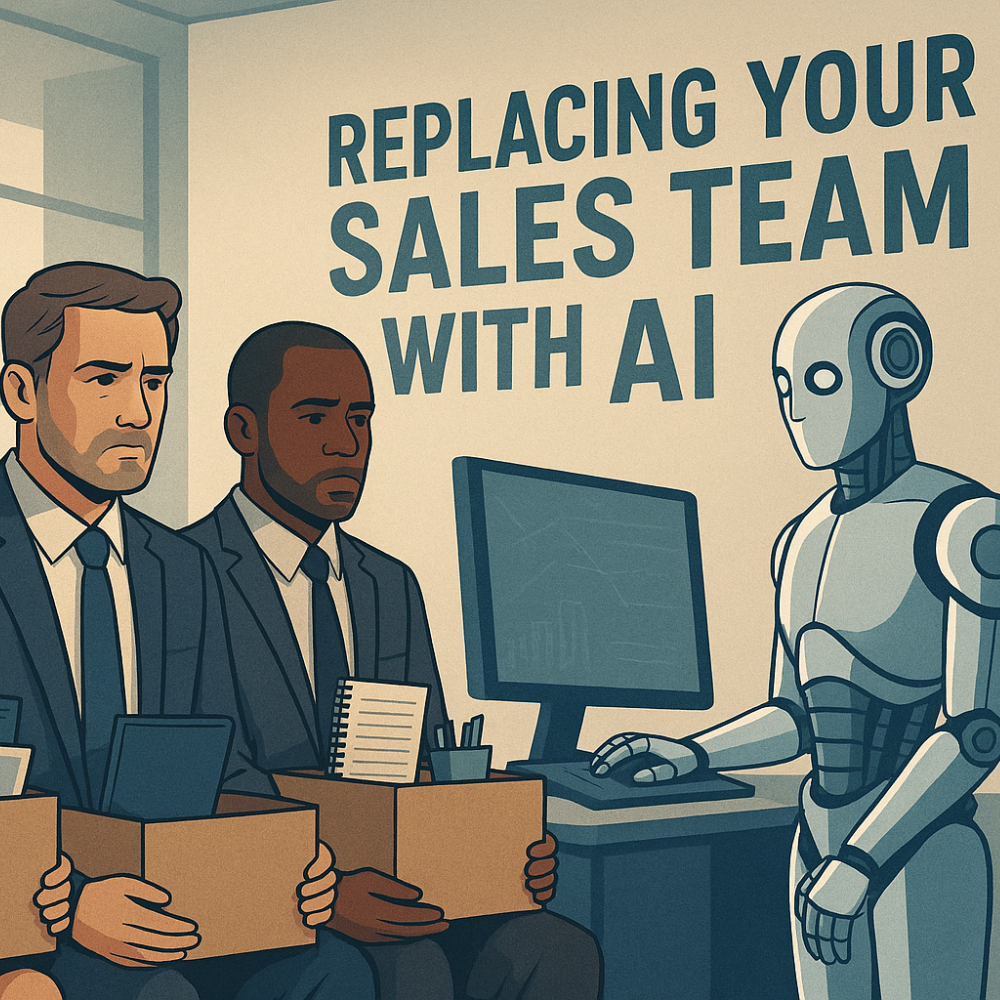
The marketplace won't stop talking about AI, but almost nobody is answering the practical question: what can it actually do for your sales and marketing operations right now? This piece walks through eleven concrete use cases — across marketing, outbound, enablement, and revenue operations — evaluating each one on what it does, what it's worth, and how it tends to fail.

Lorem ipsum dolor sit amet, consectetur adipiscing elit proin mi pellentesque lorem turpis feugiat non sed sed sed aliquam lectus sodales gravida turpis maassa odio faucibus accumsan turpis nulla tellus purus ut cursus lorem in pellentesque risus turpis eget quam eu nunc sed diam.
Lorem ipsum dolor sit amet, consectetur adipiscing elit proin mi pellentesque lorem turpis feugiat non sed sed sed aliquam lectus sodales gravida turpis maassa odio.

Lorem ipsum dolor sit amet, consectetur adipiscing elit consectetur in proin mattis enim posuere maecenas non magna mauris, feugiat montes, porttitor eget nulla id.
Lorem ipsum dolor sit amet, consectetur adipiscing elit ut suspendisse convallis enim tincidunt nunc condimentum facilisi accumsan tempor donec dolor malesuada vestibulum in sed sed morbi accumsan tristique turpis vivamus non velit euismod.
“Lorem ipsum dolor sit amet, consectetur adipiscing elit nunc gravida purus urna, ipsum eu morbi in enim”
Lorem ipsum dolor sit amet, consectetur adipiscing elit ut suspendisse convallis enim tincidunt nunc condimentum facilisi accumsan tempor donec dolor malesuada vestibulum in sed sed morbi accumsan tristique turpis vivamus non velit euismod.
A grounded look at eleven use cases — what they do, what they're worth, and where they fail.
The marketplace won't stop talking about AI. Every vendor email, every LinkedIn post, every conference keynote. It's loud, it's constant, and the pace is genuinely hard to keep up with — especially on top of everything else you're carrying in your organization.
But underneath the noise is a fair question that almost nobody is answering plainly:
What can AI actually do for your sales and marketing operations? Not in theory. Not in three years. Right now, practically, in the work you're already doing.
That's what this piece is for.
I've spent the last several weeks looking at where AI is delivering measurable results for revenue teams, where it's overhyped, and where the real opportunities are hiding in plain sight. What I'll do here is walk you through eleven concrete use cases — across marketing, outbound, sales enablement, and revenue operations — using a consistent framework so you can decide which ones matter for your business.
A note before we begin: when I say "AI", I mean the modern wave of generative AI and AI agents — the tools built on large language models and predictive systems that have moved from experimental to operational over the past 24 months. Some of what I'll cover is mature. Some is still maturing. I'll flag which is which.
And a note on the state of the market. The headline numbers are striking: 96% of B2B marketers report using AI in their roles, 81% of sales teams have either implemented or are experimenting with AI, and AI spending in marketing rose roughly 64% year-over-year, with sales close behind at 61%. But adoption isn't the same as advantage. McKinsey's 2025 State of AI survey found that while 78–88% of organizations use AI in at least one function, only 39% report any enterprise-wide EBIT impact, and just 5.5% qualify as "AI high performers". The gap between "we use AI" and "AI changed our results" is the real story of 2026.
That's the gap this article is trying to help you close.
Before we get into the use cases, it's worth zooming out. Most of the AI conversation conflates fundamentally different ways of using the technology — which is part of why the topic feels overwhelming. There are really only five, and almost everything in this piece is one of them or a combination.
1. Direct Chat (Standalone AI)
You open ChatGPT, Claude, or Gemini in a browser tab and have a conversation. You ask it to draft something, summarize something, brainstorm something. The AI does the work; you copy the result somewhere else. This is where almost every team starts. It's the most flexible mode, but also the most dependent on you remembering to use it and to integrate the output back into your workflow.
2. Embedded AI (Inside Your Existing Tools)
The same AI capability, but built into the tools you already use. Claude for Excel. Copilot in Microsoft 365. Salesforce Einstein. HubSpot Breeze. Notion AI. The AI has access to your data already and lives where the work happens — so there's less context-switching and less prompt-juggling. This is where most marketing and sales teams will see their first compounding gains.
3. AI Coding (AI That Builds With You)
Tools like Claude Code, GitHub Copilot, and Cursor that let you or your developers build software, automations, and internal tools significantly faster — including lightweight applications that used to require an engineering ticket. For business owners without a technical team, this mode unlocks a category of capability that used to be inaccessible.
4. AI Agents (AI That Takes Action)
This is where AI moves from "answer questions" to "do work." An agent might operate inside a single tool — like a ClickUp agent that automatically creates tasks, updates project status, and cleans up stale records — or it might operate across tools, using a connector layer like Zapier, n8n, or native integrations to chain actions together (e.g., new lead in CRM → research the company → draft outreach → send for human approval). Most of the high-impact revenue operations use cases later in this piece live here.
5. AI Employees (Orchestrated Multi-Agent Systems)
The frontier mode. A coordinated system where multiple specialized agents share data, hand off work to each other, and execute end-to-end workflows with human oversight. Think: an "AI SDR" that researches accounts, drafts outreach, schedules meetings, updates the CRM, and routes complex objections to a human — all without manual orchestration between steps. This is the most powerful mode, the most fragile, and the most overhyped right now. The companies getting real value from it in 2026 are almost always the ones that mastered the first four modes first.
A useful way to hold these together: they're roughly a ladder of autonomy. At the top (Direct Chat), you're driving every interaction. As you move down toward AI Employees, the AI operates with increasing independence under your supervision.
You don't need to be at the bottom of the ladder to win with AI. Most of the real gains in 2026 are coming from teams executing modes 1, 2, and 4 exceptionally well — not from teams chasing mode 5 before they've built the foundation.
For each use case, I'll answer eight questions:
Field: What It Tells You
Use Case Name: A plain-English label
Category: Where it lives in the revenue motion
What It Does: The mechanism, in 1-2 sentences
Where It Fits: Which function or stage benefits
Realistic Impact: Honest range, not vendor-claim numbers
How to Implement: The actual setup pattern
Suggested Tools: 2-3 options across price points
Watch Out For: The failure mode or overhype
The most important field, in my opinion, is "Watch Out For." Most articles on AI in sales will tell you what's possible. Very few will tell you how it actually fails. I've tried to be honest about both.
Category: Marketing — Content Operations
What It Does: Uses generative AI to draft, repurpose, edit, and scale written, visual, and video content — blog posts, emails, landing pages, social, ad variants, briefs, even webinar derivatives.
Where It Fits: Any marketing function with chronic content debt. Particularly powerful for content marketing, demand generation, and field/event marketing teams.
Realistic Impact: Teams that adopted AI content tools in 2024 now produce roughly 4.1x more published content per marketer per month than pre-adoption baselines, with content marketing specifically hitting a 4.6x multiplier. One award-winning agency reported a 50% reduction in copy production time and a 93% reduction in copywriting turnaround.
How to Implement: Start with a single content type (blog drafts, email sequences, or social repurposing). Build a prompt library with brand voice, audience, and structural conventions baked in. Define a human editing standard — the data suggests 25–45% editing by word count is the sweet spot for organic search performance.
Suggested Tools: ChatGPT or Claude (general-purpose), Jasper or Copy.ai (marketing-specific), Anthropic Claude with custom projects (for teams that want tighter brand control).
Watch Out For: The "4x more content" trap. More content with declining quality is a net negative — both for your brand and for your search performance. Roughly 67% of B2B buyers say they can identify unedited AI content, and 58% say that identification reduces trust in the brand. The point of AI in content isn't volume. It's leverage on the work that was already worth doing.
Category: Marketing — Search & Discovery
What It Does: Restructures your content and metadata to be cited by AI answer engines (ChatGPT, Perplexity, Gemini, Google's AI Overviews) — not just ranked by traditional search engines.
Where It Fits: Any organization where buyers research vendors online. This is becoming the dominant top-of-funnel motion for B2B.
Realistic Impact: Roughly 27% of B2B buyers now use AI chat as their first research step before a purchase decision, and 80% of B2B tech buyers use generative AI as much as traditional search when researching vendors. Pages that lead with a one-paragraph direct answer followed by supporting detail are cited 2.1x more often than pages with meandering openings.
Where It Fits: Marketing teams that own organic traffic and brand discoverability — and any sales team that depends on inbound demand.
How to Implement: Audit your top-performing pages and rewrite the openings to lead with a direct, structured answer. Add structured data (schema markup), named entities, and first-party data (your own studies, your own benchmarks). Track citations in answer engines, not just rankings in search.
Suggested Tools: Profound or Otterly.AI (AEO-specific monitoring), Surfer SEO or Clearscope (content optimization), Semrush or Ahrefs (traditional SEO with AEO modules).
Watch Out For: Treating AEO as a tactic rather than a discipline. SEO took fifteen years to mature; AEO is being figured out in real time. The fundamentals — useful content, clear structure, defensible expertise — still matter most. Don't gut your content strategy chasing the latest answer-engine fad.
Category: Marketing — ABM / Demand Gen
What It Does: Uses AI to identify accounts showing buying behavior — based on third-party intent data, technographic signals, hiring patterns, funding events, and engagement with your own properties — before those accounts ever fill out a form.
Where It Fits: B2B organizations with longer sales cycles, defined ICPs, and a marketing-to-sales handoff that needs prioritization. Especially useful for ABM motions.
Realistic Impact: Companies embedding AI agents across the customer journey are reporting up to 40% higher lifetime value from client portfolios. Signal-based selling consistently outperforms list-based selling — the differentiator isn't AI itself, it's that real-time buyer signals replace static lists and generic cadences.
How to Implement: Define your ideal customer profile precisely — firmographic, technographic, behavioral. Layer in an intent data source. Build scoring rules with marketing and sales together (not in a vacuum). Pilot with one segment before scaling.
Suggested Tools: 6sense or Demandbase (enterprise ABM with intent), Clearbit or ZoomInfo (data enrichment + scoring), Apollo (more accessible price point with native scoring).
Watch Out For: Scoring on signals you can't act on. If your sales team can't reach the buying committee at the right moment, intent data becomes an expensive way to feel busy. Signals only matter if they trigger a meaningful response — the operational discipline matters more than the data source.
Category: Sales — Prospecting / SDR
What It Does: Triggers personalized outbound sequences off real-time buyer signals (job changes, funding rounds, tech adoption, content engagement, event attendance) rather than off static lists.
Where It Fits: Outbound sales teams of any size, but particularly those struggling with reply rates and meeting conversion on traditional cold outreach.
Realistic Impact: Pure volume cold outreach is in steep decline; signal-based outreach is now considered the default operating mode for high-performing teams in 2026. McKinsey documented a single global industrials firm where a generative AI sales research tool drove 40% higher conversion rates.
How to Implement: Pick 3–5 high-fidelity signals that genuinely indicate buying intent for your business. Build sequences that explicitly reference the signal in the opening. Define guardrails on volume — signal-based outbound is a quality play, not a volume play.
Suggested Tools: Clay (signal aggregation + enrichment + personalization), Apollo or Outreach (sequencing with signal triggers), Lavender or Smartlead (message-level personalization and deliverability).
Watch Out For: Signal fatigue. If you're triggering on every job change and every funding announcement, your sequences will start to look like everyone else's — buyers get the same "congrats on the new role" email from twelve vendors in one week. The advantage of signal-based outbound only holds if your signals are differentiated and your messaging meaningfully connects the signal to value the buyer cares about. Volume isn't the moat. Relevance is.
Category: Sales — Outbound (AI Employee tier)
What It Does: Deploys a fully autonomous AI representative that handles the end-to-end SDR workflow — identifying target accounts, researching contacts, drafting and sending personalized outreach sequences, responding to replies, handling early-stage objections, booking meetings, and updating the CRM — under defined parameters with human oversight on exceptions.
Where It Fits: Companies with high-volume outbound needs, lean teams, or coverage gaps that human SDRs can't fill (24/7 inbound triage, multi-language outreach, dormant lead re-engagement). Particularly attractive for early-stage companies that want pipeline before they're ready to hire and manage a full SDR team — and for established teams that want to free human SDRs to focus on the highest-value accounts.
Realistic Impact: Vendor claims are aggressive (often "10x a human SDR"). Independent benchmarks are scarce, and the honest range is wide. Well-deployed AI SDRs can produce meeting volume comparable to a junior human SDR at meaningfully lower cost — but the quality of those meetings varies dramatically with how well you've configured ICP, value prop, and signal sources. Some teams report it as a genuine pipeline contributor; others have quietly walked deployments back after the meetings booked turned out to be poorly qualified.
How to Implement: Treat it like hiring an employee, not buying a tool. Define ICP, value proposition, qualification criteria, voice and tone, and escalation rules with the same rigor you'd use for an actual SDR onboarding plan. Start with one narrow segment or one specific job (e.g., re-engaging dormant leads, not all outbound). Monitor reply quality, sentiment, and unsubscribe/complaint rates obsessively for the first 90 days. Keep a human in the loop on every meeting before it lands on a calendar.
Suggested Tools: 11x (Alice — one of the category leaders), Artisan (Ava), AiSDR, Regie.ai, Qualified (Piper, focused on inbound). For teams who want more control, the build-it-yourself path using Clay + a sequencing platform + custom AI workflows trades setup time for flexibility and tighter brand control.
Watch Out For: This is the most overhyped category in the AI sales stack right now — and the failure mode is brutal. High-volume mediocre outreach burns your domain reputation, exhausts your TAM, and damages your brand at scale, often before you have data to know it's happening. The companies winning with AI SDRs in 2026 aren't the ones who deployed them to replace humans. They're the ones who deployed them for a specific, narrow function — dormant lead re-engagement, low-fit prospect nurturing, after-hours inbound qualification — while their human SDRs focused on the accounts that actually matter. If your plan is "fire the SDR team and switch to AI," you're the cautionary tale in next year's article.
Category: Sales — Pre-Call Preparation
What It Does: Compiles structured account briefings — company news, funding, leadership changes, recent earnings commentary, relevant initiatives, mutual connections, and likely pain points — in minutes instead of hours.
Where It Fits: Account executives, BDRs preparing for discovery calls, customer success managers preparing for QBRs. Particularly high-leverage for teams selling into enterprise accounts.
Realistic Impact: McKinsey's research on AI in sales documents call efficiency improvements of 60–70% and lead/appointment increases above 50% in AI-enabled sales processes. The single biggest user-reported gain is reclaimed selling time — reps in 2026 still lose roughly 70% of their time to non-selling activities, and meeting prep is one of the largest line items.
How to Implement: Build a standard pre-call briefing template (your team's, not a vendor's). Use a research tool that pulls from public sources and your CRM. Make the briefing automatic — if the rep has to remember to ask, they won't.
Suggested Tools: Claude or ChatGPT with web access (lowest barrier, surprisingly capable), Perplexity (research-optimized), purpose-built tools like Clay, Apollo's AI research, or HubSpot Breeze (when you need CRM-integrated workflows).
Watch Out For: Briefings that are too long. A great briefing is half a page, not five pages. If the rep can't read it in two minutes before the call, they won't read it at all — and they'll fall back on the surface-level prep they were doing before.
Category: Sales Enablement — Skills Development
What It Does: Lets reps rehearse live conversations against AI personas — different buyer types, objections, deal stages — and get instant scoring on what worked, what didn't, and where to improve.
Where It Fits: Onboarding new reps, ramping into new products or segments, preparing for high-stakes calls. Particularly valuable for teams without a dedicated sales coach or where managers don't have time for traditional 1:1 role-play.
Realistic Impact: Hard impact metrics on AI coaching are still emerging. The directional signal: 46% of U.S. B2B go-to-market leaders plan to increase their AI sales tool investment in 2026, with coaching and role-play one of the fastest-growing categories.
How to Implement: Start with a single high-leverage scenario (e.g., your most common objection). Have your top reps define what "good" looks like before turning it over to AI scoring — otherwise you're optimizing for someone else's model of selling, not yours.
Suggested Tools: Highspot (integrated with broader enablement), Second Nature or Hyperbound (purpose-built role-play), Gong's Engage (if you already use Gong).
Watch Out For: AI scoring that rewards form over substance. A rep can deliver a perfectly structured discovery question and still completely miss what the buyer actually said. Use AI coaching for repetition and reps, but keep human review on the highest-stakes scenarios.
Category: Sales Enablement — Call Analysis
What It Does: Records, transcribes, and analyzes sales calls and meetings to surface patterns — what messaging works, where deals stall, which objections come up most, which reps are using the playbook.
Where It Fits: Sales managers coaching teams, marketing teams refining messaging, RevOps teams diagnosing pipeline health. Becomes more valuable the more reps you have on the team.
Realistic Impact: Conversation intelligence has matured enough that it's now considered baseline infrastructure for mid-market and enterprise revenue teams. Salesforce's research shows AI-enabled sellers are 1.3x more likely to report revenue growth, with much of that lift attributed to better pipeline hygiene and focus driven by call insights.
How to Implement: Define what you want to learn before turning the tool on. "We want to know which objections are most common in late-stage deals" is a usable goal. "We want insights" is not. Make the insights actionable in weekly forecast or pipeline reviews.
Suggested Tools: Gong (category leader, premium pricing), Chorus by ZoomInfo (strong alternative), Clari Copilot or Salesloft Conversations (if you're already on the platform), Avoma or Fireflies (more accessible price points).
Watch Out For: Buying conversation intelligence and not changing how you run pipeline reviews. The tool is only valuable if it changes a decision. Most teams that abandon conversation intelligence after a year do so not because the data was bad — but because nobody integrated it into the operating cadence.
Category: Sales Enablement — Proposal Operations
What It Does: Drafts responses to RFPs, security questionnaires, and complex proposals by pulling verified content from your knowledge base, prior responses, and product documentation.
Where It Fits: Companies selling into mid-market and enterprise where RFPs and security reviews are a regular part of the deal cycle. Particularly high-impact for SaaS, professional services, and regulated industries.
Realistic Impact: Specialized RFP platforms claim 10x faster response with 95%+ accuracy when configured well. Even with vendor claims discounted, the productivity gain in this category is among the most defensible in the AI sales stack — RFPs are structured, repetitive work with clear quality checks.
How to Implement: Build a clean, centralized content library before deploying any tool — this is the unglamorous prerequisite that makes the difference between "magical" and "useless." Define ownership for keeping content current.
Suggested Tools: Loopio or Responsive (RFP-specific, strong category leaders), Inventive AI (newer, AI-native), Notion AI or Claude Projects (for smaller teams that don't need a dedicated platform).
Watch Out For: Stale content propagating at scale. The faster you can produce RFP responses, the faster you can produce wrong RFP responses. Quarterly content audits are non-negotiable.
Category: RevOps — Data Quality
What It Does: AI agents monitor your CRM for stale records, duplicates, missing fields, and inconsistencies — and either fix them automatically or surface them for human review.
Where It Fits: Every revenue team. CRM hygiene is the single most consistently broken thing in B2B revenue operations, and AI is genuinely changing what's possible here.
Realistic Impact: Industry-average CRM hygiene compliance with manual rep entry sits around 40%; AI-native platforms claim to reach 100% compliance without behavior change. Companies with clean CRM data close roughly 29% more deals. RevOps teams traditionally spend up to 70% of their time on hygiene, cleanup, and reconciliation.
How to Implement: Define what "clean" means for your business — which fields matter, what completeness threshold counts as "good," what stages require what data. Then deploy an agent on one object (typically Contacts or Opportunities) and prove it works before expanding.
Suggested Tools: Oliv.ai or People.ai (AI-native, agentic), Openprise or RingLead (traditional data quality with AI features), HubSpot Breeze or Salesforce Agentforce (if you want native to your CRM).
Watch Out For: AI confidently filling fields with wrong data. The failure mode of hygiene automation is plausible-but-incorrect — a stage update that looks right but isn't, a contact role that's almost right but misleads forecasting. Always start with audit-mode (the agent recommends, the human approves) before moving to autonomous mode.
Category: RevOps — Forecasting / Pipeline Intelligence
What It Does: Uses CRM data, activity capture, conversation signals, and historical patterns to predict deal outcomes, surface risk earlier, and produce forecasts that improve over time.
Where It Fits: Sales leaders and RevOps teams who run a forecast cadence — typically anyone with more than 5–10 reps and a defined pipeline review process.
Realistic Impact: AI-powered revenue platforms commonly report forecast accuracy improvements of 30–50% and pipeline leak reductions of around 25%. Some teams cite accuracy lifts as high as 79% once models mature and activity capture is complete. Gartner predicts that 65% of B2B sales organizations will use AI-driven decision-making for pipeline management by 2026.
How to Implement: Get your stage definitions and exit criteria defensible before turning on AI forecasting. The model can only learn from clean signal — if your reps are inconsistent about what "Stage 3" means, the forecast will be inconsistent too. Pilot with one segment or business unit first.
Suggested Tools: Clari (category leader, enterprise), Gong's forecasting modules (strong if you're already on Gong), Forecastio or BoostUp (more accessible pricing), Salesforce Einstein or HubSpot Predictive (native to your CRM).
Watch Out For: Forecast accuracy as a vanity metric. A forecast can be statistically accurate and still be useless if the leadership team doesn't act on it. The point of AI forecasting isn't a better number — it's a better conversation in your weekly pipeline review.
If you take nothing else from this piece, take these four:
Clean data is the prerequisite, not the optimization. AI doesn't fix data problems — it amplifies them. The teams getting real ROI from AI in 2026 are the ones that invested in data quality, stage definitions, and operational discipline first. The teams that skipped that step are the ones publishing case studies about "lessons learned."
Pick one use case and prove it before stacking more. The pattern across every credible study I reviewed is the same: the highest-ROI deployments target one high-frequency, rule-governed task at a time. Lead with CRM hygiene or content production or meeting prep — not all three at once.
Keep humans in the loop, especially early. The highest-performing AI deployments in 2026 are not fully autonomous. They escalate exceptions, flag low-confidence decisions, and maintain clear handoff points to human reps. Trust is earned, not configured.
The orchestration question matters more than the tool question. A strong revenue motion isn't ten AI tools doing ten different things. It's a system where signal flows from one capability to the next — intent data drives outbound, conversation intelligence sharpens enablement, hygiene feeds forecasting, forecasting drives pipeline reviews. The competitive advantage isn't the tools you buy. It's the system you build with them.
If you'd like to talk through where any of this fits in your business, let's set up a conversation.
Andrei Trapizonian is the founder of A.T. Revenue Performance Global and the Systems That Win™ practice. He advises founders and revenue leaders on building sales and marketing operations that produce predictable, compounding growth.

.svg)

.svg)